What's Really Included in a Spiritual Homestay Stay in Kanchipuram?
Before you book, understand exactly what you get — and what you don't — at a traditional spiritual homestay like Golden Loom.
Read ArticleA heritage homestay tucked away from the city — where your family has the entire home to yourselves, and every morning begins with the sound of distant temple bells.
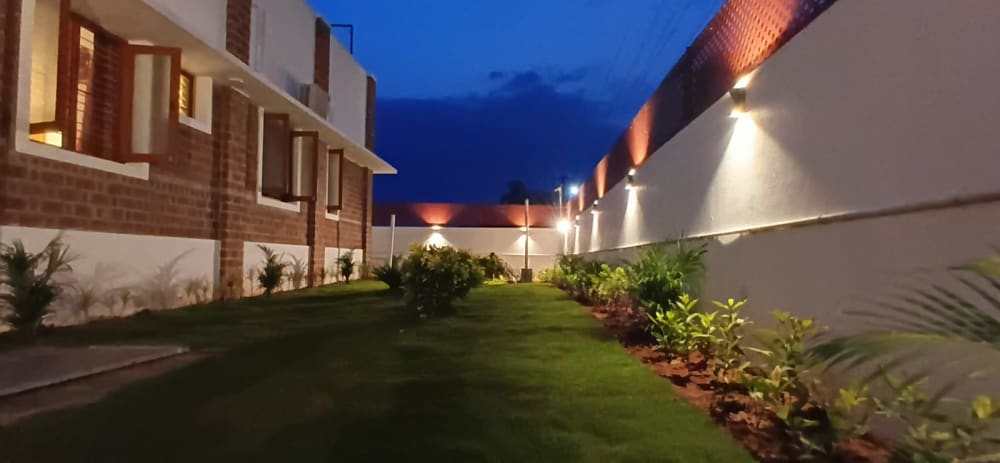
Golden Loom was built with one purpose — to give pilgrims visiting Kanchipuram's ancient temples a place that truly feels like home. A whole, warm, private space where your family can arrive, settle in, and breathe freely — away from the noise and chaos of the city.
"Kanchipuram deserves to be felt slowly — with the people who matter most."
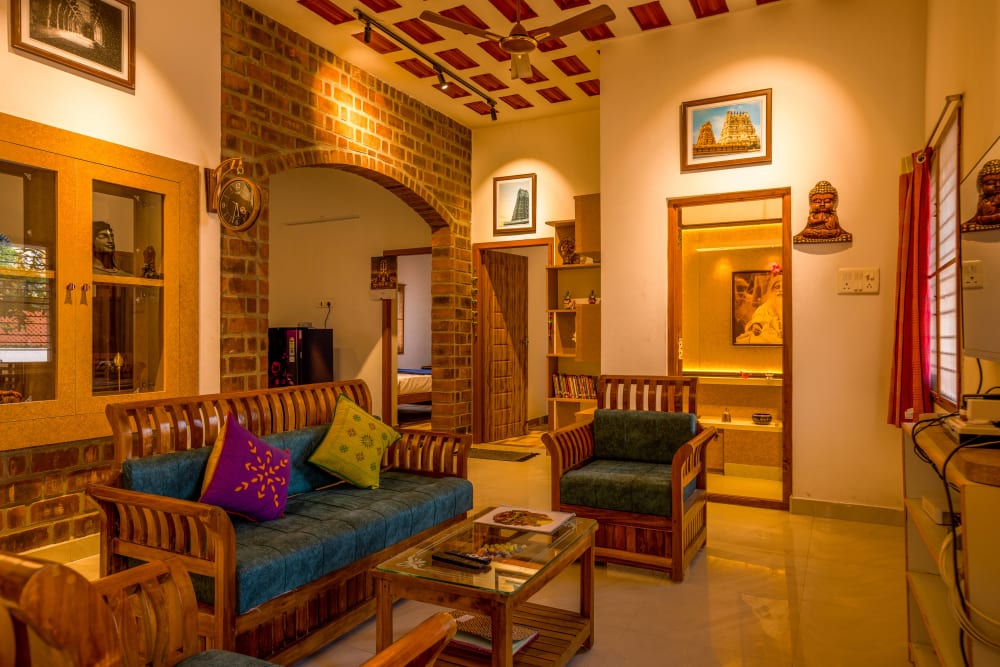
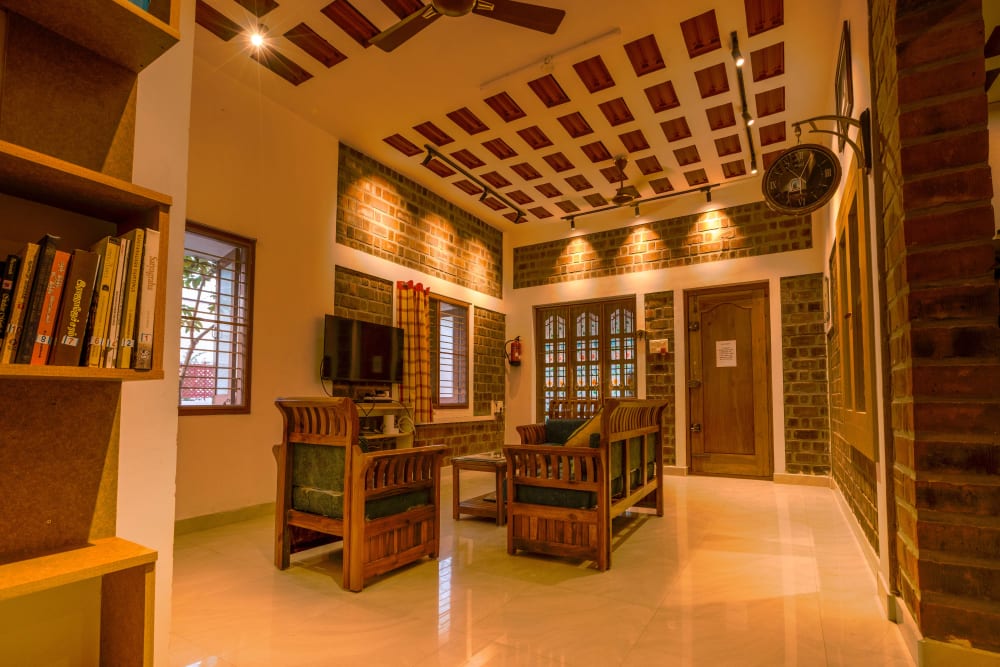
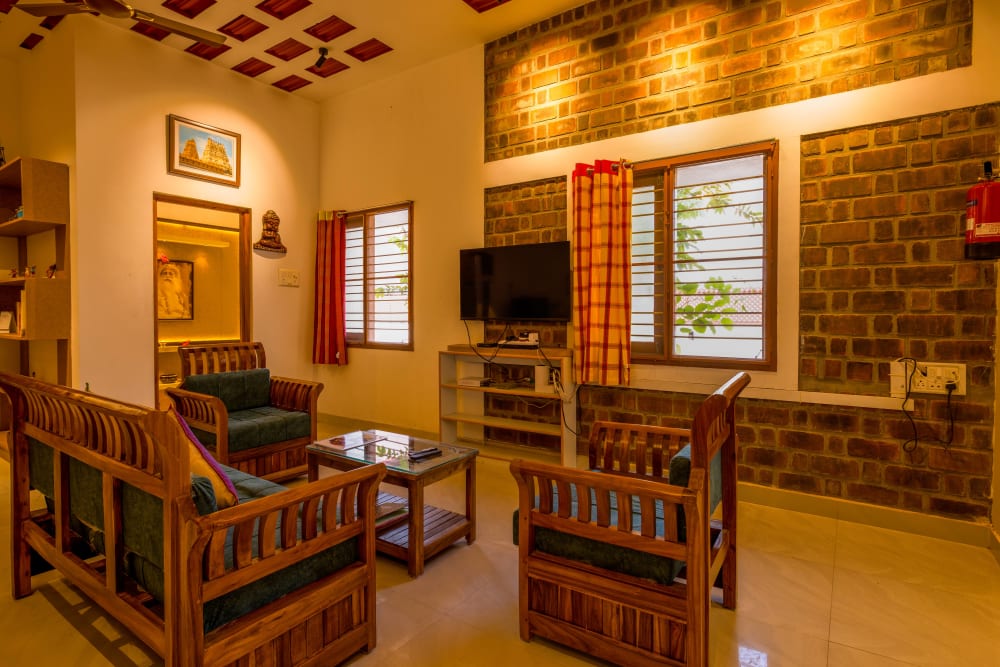
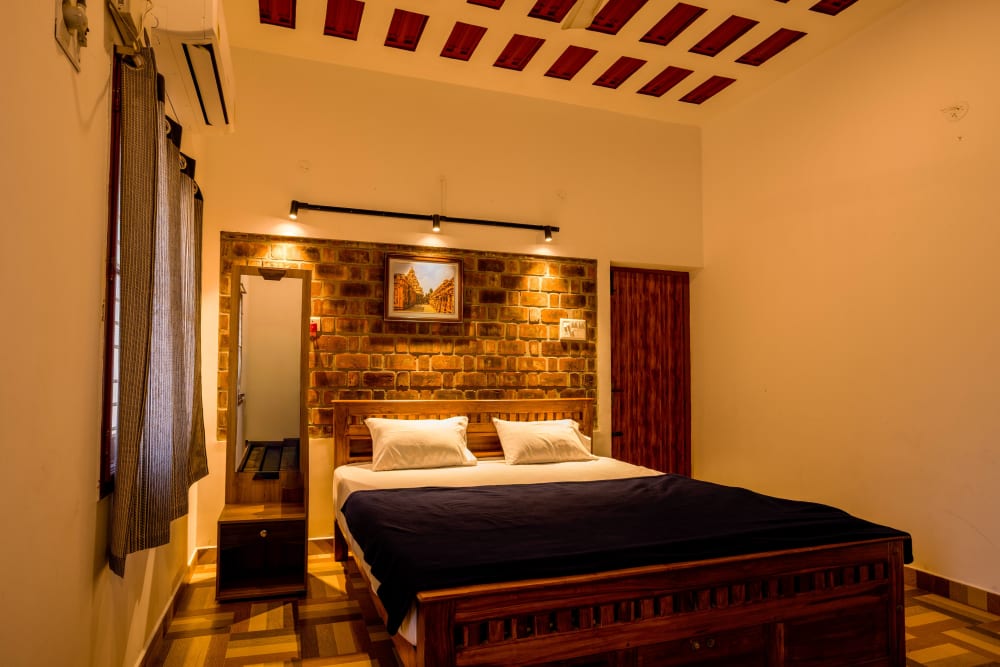
The heritage-inspired interiors — exposed brick archways, teak wood furniture, temple art on the walls — are a quiet nod to the sacred temples nearby. A dedicated yoga and meditation room, a rooftop terrace with open skies, and a thoughtfully equipped home make this the ideal base for a meaningful pilgrimage.
Both bedrooms are yours for the entire stay. Rest deeply after long temple walks — every room designed for calm and comfort.
An open sky and cool breeze — a perfect place for morning prayers, quiet reflection, or simply breathing in the peaceful air of the countryside.
Your stay at Golden Loom comes with two rare invitations — a private temple trail through one of India's oldest architectural wonders, and a visit to the hands of Kanchipuram's last silk weavers. Both complimentary. Both unforgettable.
Step inside the oldest temple in Kanchipuram — built by the Pallava king Rajasimha in the 8th century, and still one of the finest examples of Dravidian stone architecture in India. We arrange a guided walk through the temple, sharing its history, symbolism, and hidden details most visitors simply walk past.
Kanchipuram silk is not a souvenir — it is a living tradition passed through generations of weavers who still work at handlooms every morning. We take you directly to the workshops of genuine local artisans — no showrooms, no commissions — so you can watch the weaving process up close and, if you wish, purchase directly at the source.
Both experiences are complimentary for all Golden Loom guests. Just let us know in advance and we will arrange everything.
One price. Entire home. Everything included. What you see is what you get.
Greyed-out dates are unavailable. Weekends (Fri & Sat) are ₹6,500 · Weekdays ₹5,500.
Whether you're organising a group pilgrimage, planning a multi-day retreat, or representing a travel agency — we would love to speak with you directly and work out something that fits your needs perfectly.
Plot No 43, 3rd Cross St, Jina Kanchi Nagar, Thimmasamudram, Kanchipuram, Tamil Nadu 631502
Practical guides, local wisdom, and travel notes for first-time visitors to Kanchipuram — written to help you plan a meaningful stay.
Before you book, understand exactly what you get — and what you don't — at a traditional spiritual homestay like Golden Loom.
Read ArticleA complete budget breakdown — accommodation, temple entry, food, auto fares, and what to watch out for as hidden costs.
Read ArticleKanchipuram has over 100 temples. Here's the pilgrim-tested sequence that maximises your darshan time and minimises travel.
Read ArticlePrivacy, cost, and the authentic local feeling — we break down the honest trade-offs between homestays and standard hotels.
Read ArticleWhen to go, when to avoid, and how the festive calendar affects crowds, prices, and your overall temple experience.
Read ArticleLast updated: May 2026
Golden Loom Homestay is committed to protecting your personal information. This policy explains what we collect, how we use it, and your rights.
When you make a booking or enquiry, we may collect your name, phone number, email address, check-in and check-out dates, and number of guests. Booking details are shared via WhatsApp and we do not store card details.
We do not sell or share your personal data with third parties for marketing purposes. Your data is used solely for booking confirmation and communication.
We retain your booking information for up to 2 years for record-keeping purposes, after which it is securely deleted.
You may request access to, correction of, or deletion of your personal data at any time by contacting us at +91 95009 81748.
CCTV cameras are installed outside the property only — at the entrance, parking area, and road-facing areas. There are no cameras inside the home. This is for the safety and security of guests and the property.
This website uses minimal cookies to ensure it functions correctly. No third-party tracking cookies are used.
Last updated: May 2026
A booking is confirmed upon receipt of full payment. Rates are ₹5,500 per night on weekdays (Sunday–Thursday) and ₹6,500 per night on weekends (Friday–Saturday). Bookings are confirmed via WhatsApp. Payment is accepted as UPI, bank transfer, or cash at check-in.
Check-in time is 1:00 PM and check-out is 10:00 AM. Early check-in or late check-out may be arranged subject to availability, confirmed with the host in advance.
The property accommodates a maximum of 6 guests. The entire home is booked exclusively for your group.
Golden Loom is located in a traditional residential area of Kanchipuram. We kindly ask all guests to respect the neighbourhood and the character of the home.
Guests are responsible for any damage caused to the property during their stay. The host is not liable for personal loss or injury during the stay.
For any queries, reach us at +91 95009 81748 or via WhatsApp.
If you've ever searched for a homestay in Kanchipuram and found yourself wading through vague listings that promise "authentic experience" without telling you whether there's an actual kitchen or AC — you're not alone. This guide breaks down exactly what you get when you book a traditional spiritual homestay, specifically one like ours at Golden Loom.
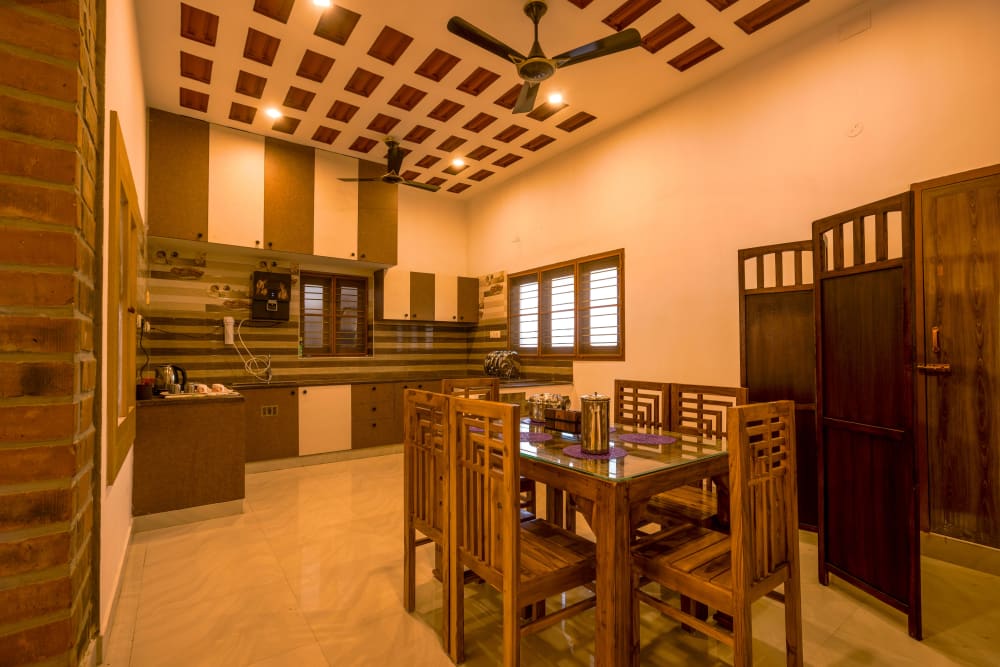
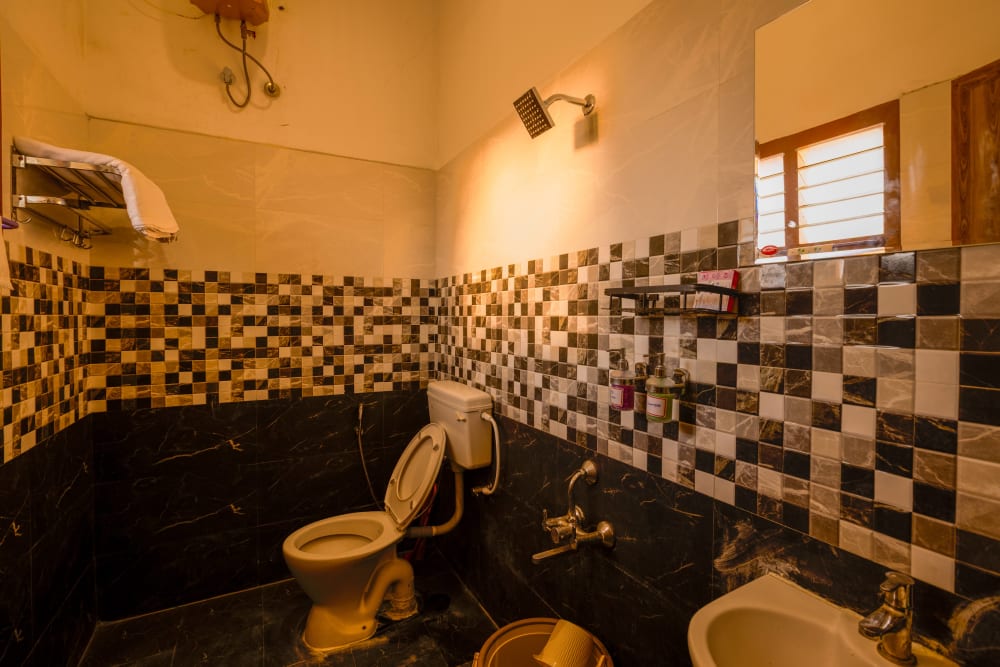
At Golden Loom, when you book the property, you get the entire home — not a room within someone else's house. That means both bedrooms, the living room, the dining area, the kitchen, and the rooftop terrace are exclusively yours. No shared bathrooms, no other guests walking through at odd hours, no awkward breakfast silences with strangers.
This matters especially for families on pilgrimage. You want to wake up early, do your morning prayers, and leave quietly without disrupting others. A full private home makes that possible.
Unlike resort-style wellness retreats, most traditional homestays do not provide structured yoga classes, meditation sessions, or guided temple tours as part of the room rate. The "spiritual" element comes from the setting, the proximity to temples, and the peaceful atmosphere — not a curated programme.
A spiritual homestay gives you the space to have your own experience — it doesn't hand you one.
Meals are usually not included unless specifically stated. At Golden Loom, we don't provide cooked meals, but the kitchen is fully equipped for reheating, and food delivery via Zomato and Swiggy covers the area. Several restaurants serving traditional South Indian food are within 3 km.
Entire home · Up to 6 guests · Best rate guaranteed
The best spiritual homestays in Kanchipuram offer something no resort can replicate — quiet, privacy, and proximity to the temples that have stood for over a thousand years. At the right property, you'll hear the morning nadaswaram from your rooftop. That alone is worth more than any amenity list.
Kanchipuram is one of the most affordable major pilgrimage destinations in India. But "affordable" is relative, and many first-time visitors either over-budget (because they've been quoted resort prices) or under-budget (because they forgot to account for temple donations, auto fares, and silk saree temptation). This is a realistic breakdown.
The range is wide. Budget lodges near the bus stand run from ₹600–₹1,200 per night for a basic double room. Mid-range hotels typically charge ₹2,000–₹4,000. A heritage homestay like Golden Loom, where you get the entire 2-bedroom home with AC, kitchen, and rooftop, starts from ₹5,500 per night — split across 4–6 people, that's ₹900–₹1,375 per person, often cheaper than a mid-range hotel room.
When split across a family of 4–6, a private entire-home stay can cost less per head than a standard hotel room.
Most Kanchipuram temples charge no entry fee for Indian nationals. A few have optional special darshan queues (₹50–₹200 per person). Budget ₹200–₹500 per person per day for special archanas, abhishekams, and voluntary donations across the main temples.
Auto-rickshaws are the primary mode. A full-day auto hire for temple visits typically costs ₹600–₹1,000 depending on negotiation. Individual hops between temples cost ₹50–₹150. Kanchipuram is compact — the major temples are all within 5 km of the city centre.
Kanchipuram is world-famous for Kanjivaram silk. Many visitors plan a budget and then encounter a weaving centre, and the budget becomes irrelevant. Set aside whatever you genuinely want to spend on sarees before you arrive, keep it in a separate envelope, and do not touch it until you're at a Government Silk Weaving Centre or a verified loom house.
₹5,500/night for the entire home · Weekdays · Up to 6 guests
The most honest advice: Kanchipuram rewards slow travel. Two nights is the minimum for a meaningful visit. Three nights lets you experience the temples at different times of day — morning aarti is very different from the late afternoon light at Ekambareswarar.
Kanchipuram is called the "City of a Thousand Temples" — though the actual number of active, accessible temples today is closer to 108 significant ones, which is still overwhelming for a first-time visitor. This is the sequence that experienced pilgrims use, optimised for minimal backtracking and maximum reverence.
Start early (before 7:30 AM) to catch the morning abhishekam at Ekambareswarar Temple — the largest temple in Kanchipuram, dedicated to Lord Shiva. The mango tree in the temple courtyard is believed to be over 3,500 years old. Dress formally: men should wear dhoti or full pants, women should wear saree or salwar with dupatta.
From Ekambareswarar, walk 10 minutes south to Kailasanathar Temple — the oldest structural temple in Tamil Nadu, built by the Pallava king Rajasimha in the early 8th century. This one is managed by the Archaeological Survey of India, not the Hindu Religious Endowment Board, so the atmosphere is quieter and more reflective.
After lunch, take an auto to the eastern part of the city and visit Varadharaja Perumal Temple — one of the 108 Divya Desams of Vishnu, with exquisite 100-pillar hall carvings. The temple tank is beautiful in the afternoon light. Allow 1.5 hours here.
The 100-pillar mandapam at Varadharaja Perumal is arguably the finest Vijayanagara-era stone carving in Tamil Nadu. Walk slowly.
Kamakshi Amman Temple is the most sacred temple for Shakta devotees and should be visited with full focus, ideally in the morning. This is the seat of the Goddess Kamakshi, and the energy in the sanctum is unlike anything at the more touristy temples. The temple's architecture dates back to the Pallava period, though much of what stands today is from the Vijayanagara era.
After Kamakshi, spend the remainder of the day exploring the smaller temples — Ulagalandha Perumal Temple, Yathothakaari Perumal Temple, and the Kumarakottam Murugan Temple. These receive fewer visitors and often have more relaxed, authentic atmospheres.
Golden Loom — entire home, up to 6 guests, ₹5,500/night
The temples of Kanchipuram are not tourist sites — they are living religious centres that have been in continuous worship for over 1,300 years. Arrive with that awareness, dress appropriately, and the city will give you something genuinely memorable.
This question comes up constantly in travel forums. The honest answer depends entirely on what kind of trip you're taking. Here's the straightforward comparison — written by a homestay, yes, but as objectively as we can manage.
Hotel: You get your booked room(s). Common areas — lobby, restaurant, corridors — are shared with all guests. If you're a family of 5 or 6, you may need two rooms, which means paying for two rooms and still sharing walls.
Homestay (entire home): You have the whole property. Kids can run between rooms. You can do your morning puja in the living room without worrying about disturbing other guests. The kitchen is yours. The rooftop is yours.
The homestay often wins on cost for groups of 4 or more — and you get private space that no hotel room configuration can match.
Hotel advantage: 24-hour front desk, room service, daily housekeeping, on-site restaurant, reliable hot water across all rooms simultaneously. Hotels have standardised service consistency.
Homestay advantage: Full kitchen (no restaurant bills), rooftop terrace, home-like atmosphere that's better for longer stays or those travelling with elderly family members who prefer not to eat in restaurants every meal.
If you're travelling with grandparents who want to do their own cooking or need flexible meal timing, a homestay kitchen changes everything.
Hotels in Kanchipuram are fine — comfortable, predictable, and well-suited for business travellers or those who want maximum convenience. But if you're coming for a pilgrimage or a family retreat, staying in a home with a heritage character, near the residential areas of the city (not the main road), puts you in a different relationship with the place. Mornings sound different. Evenings feel different.
2 bedrooms · AC · Kitchen · Rooftop · Up to 6 guests
Neither option is objectively better — they serve different travel styles. But for a family on pilgrimage to Kanchipuram, the math and the mood both tend to favour a good homestay.
Kanchipuram is a year-round destination — the temples don't close for weather — but some times of year are significantly better than others for a meaningful, comfortable visit. Here's what each season actually looks like.
This is when Kanchipuram is at its best. Temperatures are moderate (22–32°C), the North-East Monsoon typically ends by mid-November, and the air is cleaner. Festival season is in full swing — Karthigai Deepam (November/December) is spectacular, with oil lamps lit across the city. Panguni Uthiram in March is also one of the major festivals at Kamakshi Amman Temple.
Downsides: This is also when homestay and hotel rates are highest, and the popular temples (Ekambareswarar, Kamakshi Amman) can get very crowded on weekends and festival days. Book accommodation 3–4 weeks in advance during this window.
Temperatures climb significantly — 36–42°C in the peak of summer. Temple visits need to happen before 10 AM and after 4 PM to avoid the worst heat. Locals largely carry on as normal, and the temples are noticeably less crowded. This is a good time to visit if you want a quieter, more contemplative experience and can be comfortable in the heat.
Summer mornings in Kanchipuram — before 9 AM, when the temples are quiet and the stone floors are still cool — are genuinely beautiful. You will almost have the place to yourself.
Accommodation rates are lower by 10–20% during this period. If heat doesn't bother you and you're flexible, this is when the best deals and the most peaceful visits happen.
The South-West Monsoon brings heavy rain to Tamil Nadu between June and September. Kanchipuram gets moderate rainfall during this period — enough to flood streets and make outdoor temple visits uncomfortable, but rarely enough to make travel impossible. The city turns green and beautiful, and the temple tanks fill up fully.
Practical considerations: Carry a good umbrella or light raincoat. Check temple open timings as they sometimes vary during heavy rain. Accommodation is cheapest during monsoon, and weekday visits are particularly quiet and special.
For most pilgrims and family visitors, November through January is ideal — cool weather, festival energy, and full temple activity. If you want fewer crowds and don't mind heat, April and May weekdays offer an unexpectedly peaceful experience. Avoid major festival weekends unless experiencing the festival itself is your purpose.
Peak and off-peak dates · Direct booking · Best rate guaranteed
Whatever season you choose, Kanchipuram rewards visitors who slow down. Give yourself at least two nights — one night is never enough to absorb what this city has to offer.